
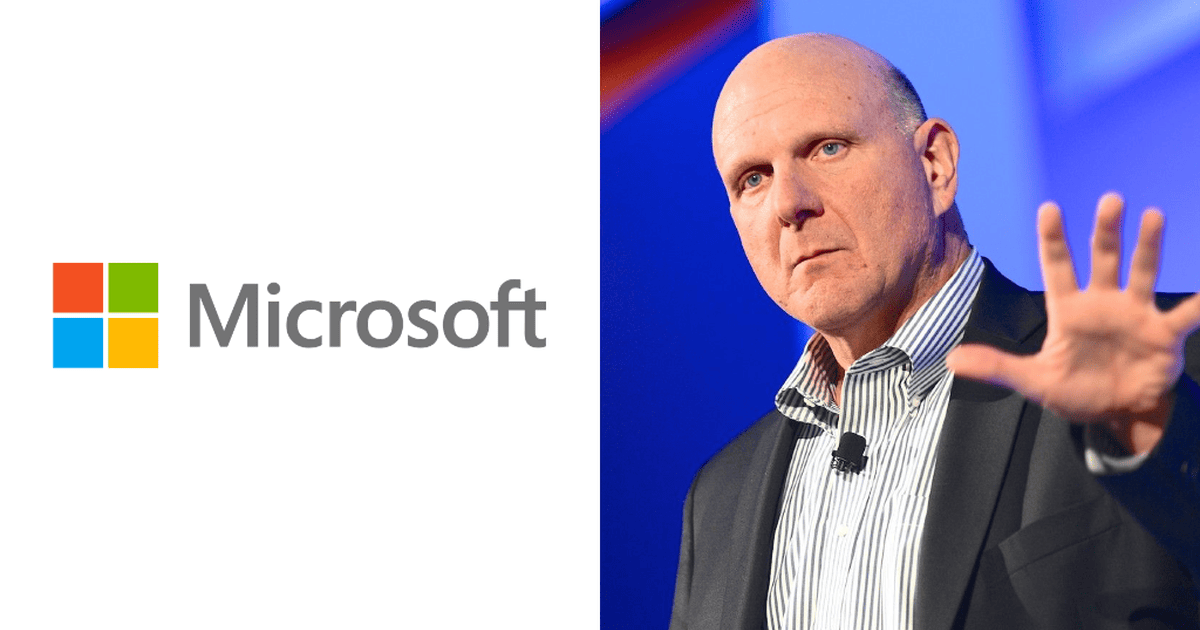
The $4 Trillion Comeback: Steve Ballmer's Half-Century Masterclass in Doing Nothing
Microsoft is back above $4 trillion this week, at fresh all-time highs after a roughly 50% run since June.
Earlier this year, the consensus was very different. Microsoft was being written off as an AI loser, a legacy software company about to be hollowed out by cheap AI coding tools and autonomous agents.
From AI Doubts to the $4 Trillion Platform Tollbooth
Two problems dominated the coverage:
- The OpenAI tie. Microsoft looked tethered to a partner whose enterprise momentum was slipping against Anthropic's Claude models.
- The capex bill. Redmond was spending tens of billions on Azure data centers and GPU clusters, with no clear timeline for the return on that money.
Nadella's answer was to loosen the OpenAI lock. Azure now sells access to whichever model a customer wants: OpenAI, Anthropic, or open source. Microsoft stopped betting on one research lab and became the platform every lab has to pass through.
As Morgan Stanley analyst Adam Wood noted in reiterating his Overweight rating on the stock, distribution is the ultimate moat.
Analysts have fallen in line. Bestshares.com has tracked 54 Microsoft ratings since May: 50 Buy, 4 Hold, and not a single Sell. October alone brought 11 Buy ratings. The average price target is $591.67.
The Real Winner: Steve Ballmer
But the biggest winner of the $4 trillion comeback is not Nadella. It is Steve Ballmer.
Ballmer is remembered as the hyper-caffeinated executive who chanted “Developers! Developers! Developers!” on stage, soaked in sweat. The persona hides one of the most disciplined buy-and-hold records in American business.
Ballmer owns slightly more than 4% of Microsoft, worth roughly $169 billion. He is the company's largest individual shareholder, ahead of Bill Gates and the estate of Paul Allen, and sits at No. 9 on the Forbes billionaires list.
He never founded a tech company. He joined Microsoft in 1980 as its 30th employee. His title was “business manager,” which in practice meant Gates's administrative lieutenant and fixer.
In 1981, when Microsoft restructured its ownership to bring in non-founders, Ballmer negotiated an agreement worth roughly 8% of the equity. Paul Allen argued that founder-level equity for an operational hire who could not write a line of code was absurdly generous. Ballmer refused to blink, and the deal closed.
Then he did the hardest thing in finance. Nothing.
A Billion-Dollar Dividend River Built on Doing Nothing
Over the following decades, Gates and Allen systematically sold down their Microsoft stakes to diversify. Ballmer held. He held through the dot-com bust, a crash he had publicly warned about in late 1999, when he said tech valuations, Microsoft's included, had detached from reality. He held through the 2008 credit freeze. He held through the failed mobile transition and the Nokia acquisition. He was pushed out as CEO in 2014, and he still held.
The result is a stake that pays him more than $1 billion a year in dividends alone. That income funds his philanthropy and the Los Angeles Clippers, arena included, without him ever needing to sell a single share.
Asked on the Acquired podcast why he never sold, Ballmer pointed to loyalty and taxes:
“Why would I sell so we have less to give to philanthropy someday? Unless I really think Microsoft's going to underperform the market by essentially the capital gains rate.”
Charlie Munger once put it to him directly: why hold when your partners sold, “I know you're not that smart.” Ballmer's answer: “No, Charlie, but I'm loyal.”
The Corporate Fortress Maxim
Concentrating over 80% of your net worth in a single stock is madness for almost anyone, and financial planners will happily tell you so. Ballmer is the exception, because Microsoft turned out to be the rare fortress: a distribution moat, locked-in enterprise customers, and the cash flow to finance its own reinvention.
His half-century bet is the proof of an old Wall Street maxim. Sometimes the most sophisticated trade is to find a true corporate fortress, ignore the noise, and do absolutely nothing.